

We understand that venturing into the world of fishing gear can feel like navigating a vast ocean, with countless options promising the perfect catch. Our aim with this guide is to equip you, the discerning angler, with the knowledge to make informed decisions when selecting your best fishing rods and reels. We will dissect the critical components, discuss the nuances of their application, and offer a clear path through the often-complex terminology, ensuring your next angling adventure is supported by the right tools.
Before we delve into specific types and features, it is crucial to conceptualize the fishing rod and reel not as individual entities, but as an interconnected system. Imagine a highly choreographed dance: the rod, with its inherent flexibility and power, acts as the lever, transmitting your force and the fish’s resistance. The reel, the engine of this system, manages the line, dictates retrieval, and applies crucial drag. A mismatch in this partnership can lead to inefficiency, frustration, and ultimately, a diminished fishing experience. Our goal is to help you select components that harmonize, much like a well-tuned orchestra.
Rod Power and Action: The Language of Flex and Fight
When we speak of a rod’s characteristics, two primary terms dominate the conversation: “power” and “action.” These are not interchangeable; rather, they describe distinct attributes that profoundly influence a rod’s utility.
Rod Power: Lifting Capacity and Backbone
Rod power refers to the rod’s strength or lifting capacity. It dictates how much force a rod can handle before it reaches its breaking point or becomes overly flexed, compromising its ability to effectively fight a fish. We categorize rod power on a spectrum from Ultra-Light to Heavy, sometimes including Extra-Heavy for specialized applications.
- Ultra-Light (UL): Designed for targeting small fish species like panfish, trout, and small bass. These rods are incredibly sensitive, allowing us to feel the subtle nibbles of wary fish. They are often paired with light lines and small lures.
- Light (L): A versatile power, suitable for slightly larger panfish, trout, and light bass fishing. They offer a good balance of sensitivity and modest lifting power.
- Medium-Light (ML): A popular choice for all-around freshwater fishing, including bass, walleye, and smaller catfish. They can handle a broader range of lure weights and fish sizes.
- Medium (M): Arguably the most common rod power, adaptable to a vast array of freshwater and even some light saltwater applications. Ideal for bass, pike, and general-purpose fishing.
- Medium-Heavy (MH): When we anticipate larger fish or need to cast heavier lures, MH rods provide the necessary backbone. They excel in applications like flipping and pitching, or targeting larger predator fish.
- Heavy (H): Reserved for battling substantial fish species, such as large catfish, musky, or light offshore saltwater fishing. These rods possess significant lifting power to subdue powerful adversaries.
- Extra-Heavy (XH): Specialized rods for extreme fishing scenarios, including heavy offshore angling, shark fishing, or musky fishing with very large baits. These are designed for brute force.
It is critical that we match the rod’s power to the target species and the line strength we intend to use. Using an Ultra-Light rod for a large catfish would be akin to using a thread to pull a tractor – a recipe for failure.
Rod Action: Where and How the Rod Bends
While power describes the rod’s overall strength, action describes where along its length the rod primarily bends when under pressure. This characteristic determines how quickly the rod loads and unloads, affecting casting distance, accuracy, and hook-setting capabilities.
- Fast Action: These rods bend predominantly in the upper quarter or third of their tip. This design provides maximum sensitivity, allowing us to detect even the slightest bites. The stiff backbone translates into powerful hook sets and excellent control over a battling fish. They excel in situations requiring precise lure presentations and strong hook penetration, such as jigging or worm fishing.
- Moderate-Fast Action: A popular compromise, bending in the upper half of the rod. They offer a good balance of sensitivity and forgiveness. This action allows for slightly longer casts than fast action rods and absorbs more shock from a fighting fish, reducing the chances of pulling hooks. They are often preferred for versatile lure presentations like crankbaits and spinnerbaits.
- Moderate Action: These rods bend across the upper two-thirds of their length. They load deeper into the blank, resulting in longer, more parabolic casts. The increased flexibility acts as a shock absorber, making them ideal for treble hook baits where a gentler hook set is often preferred to prevent tearing out of the fish’s mouth. They are excellent for techniques like trolling or fishing with reaction baits.
- Slow Action: Bending almost uniformly from the tip to the butt (handle). These rods offer maximum flexibility and are primarily used for small, delicate presentations where a soft hook set is paramount, such as ultralight panfishing or fly fishing applications. Their casting distance is generally limited, but their ability to load with minimal weight is unparalleled.
Our choice of rod action must align with our fishing technique. A fast action rod might be perfect for punching through heavy cover, but an intermediate action may be better for a finesse retrieve.
When selecting the best fishing rods and reels, it’s also essential to consider how to enhance your fishing experience with the right accessories. A related article that can be incredibly helpful is about creating your own fishing rod holder. This DIY guide provides step-by-step instructions on how to make a PVC bank fishing rod holder, which can be a great addition to your fishing gear. You can read more about it in this article: How to Make a PVC Bank Fishing Rod Holder.
Reel Types: The Engine of Our System
Just as rods come in various forms, so do reels, each designed for specific applications and offering distinct advantages. We will focus on the most prevalent types, providing you with a foundational understanding of their mechanics and utility.
Spinning Reels: Accessibility and Versatility
Spinning reels are arguably the most ubiquitous reel type, particularly among new anglers, due to their ease of use and versatility. They are characterized by a fixed spool, meaning the spool does not rotate during casting. Instead, the line peels off the end of the spool.
Key Features of Spinning Reels:
- Open-face Design: This design allows us to visually inspect the line and prevent tangles.
- Bail Arm: This wire arm guides the line onto the roller and prevents it from spilling off the spool during retrieval. Flipping the bail open readies the reel for casting.
- Drag System: Located either at the front (top of the spool) or rear of the reel. Front drag systems generally offer more consistent and powerful drag adjustment. The drag allows line to be pulled off the spool when a fish exerts more force than the set resistance, preventing line breakage.
- Anti-Reverse Switch: This switch prevents the handle from turning backward, which can be useful for setting the hook or for specific fishing techniques.
- Gear Ratio: Indicates how many times the spool rotates for every full turn of the handle. Higher ratios mean faster retrieves, while lower ratios provide more cranking power. For example, a 6.2:1 gear ratio means the spool revolves 6.2 times for each handle rotation.
Advantages and Disadvantages:
Spinning reels excel in casting light lures and baits, making them ideal for finesse techniques and presentational fishing. Their intuitive operation makes them a prime choice for beginners. However, they can be more prone to line twist, particularly if overfilled or used with improper line management techniques. They also typically offer less casting accuracy for heavy baits compared to baitcasting reels.
Baitcasting Reels: Precision and Power
Baitcasting reels differ significantly from spinning reels in their operation. The spool rotates during the cast, directly paying out line as the lure flies. This design offers a direct connection to the lure, providing superior sensitivity and control.
Key Features of Baitcasting Reels:
- Rotating Spool: The hallmark of a baitcaster. Requires thumb control during casting to prevent “bird’s nests” (tangles).
- Braking System: Essential for controlling spool rotation during the cast.
- Centrifugal Brakes: Utilize pins that extend outwards as the spool spins, applying friction to the reel’s internal walls. Adjustable by opening the side plate.
- Magnetic Brakes: Employ magnets to create resistance against the spool, often adjustable externally with a dial.
- Dual Brakes: Some reels combine both systems for advanced customization.
- Drag System: Typically star-shaped and located on the side of the handle. Generally, baitcasting drags are more powerful and offer finer adjustments than spinning reels of comparable size.
- Thumb Bar: Engages or disengages the spool for casting and retrieval.
Advantages and Disadvantages:
Baitcasting reels are the workhorses for applications requiring precision casting, long distances with heavier lures, and battling larger, more powerful fish. Their superior drag systems and direct line connection provide unparalleled control. However, they possess a steeper learning curve than spinning reels, with “bird’s nests” being a common frustration for newcomers. They are not well-suited for very light lures.
Fly Reels: The Art of Line Management
Fly reels are a distinct category, designed exclusively for fly fishing. Unlike spinning or baitcasting reels, their primary function is not casting distance or powerful retrieval, but rather line storage and drag control. The cast itself is generated by the heavy fly line, not the small, lightweight fly.
Key Features of Fly Reels:
- Single-Action Design: For every turn of the handle, the spool rotates once.
- Large Arbor: Many modern fly reels feature a large arbor design, meaning the core around which the line is wound is larger. This reduces line memory (coiling) and allows for faster line retrieval.
- Drag System: Crucial for fighting fish, especially larger species. Fly reel drags can range from simple click-and-pawl systems (offering basic resistance) to sophisticated sealed disc drags (providing powerful, smooth, and consistent pressure).
- Retrieve Hand: Many fly reels can be converted for either right or left-hand retrieve.
Advantages and Disadvantages:
Fly reels are specifically engineered for the unique demands of fly casting, line management, and protecting delicate fly leaders. They are not suitable for conventional bait or lure fishing. Their primary disadvantage lies in their specialized nature, making them unsuitable for other angling disciplines.
Matching the Rod and Reel: A Synergistic Approach
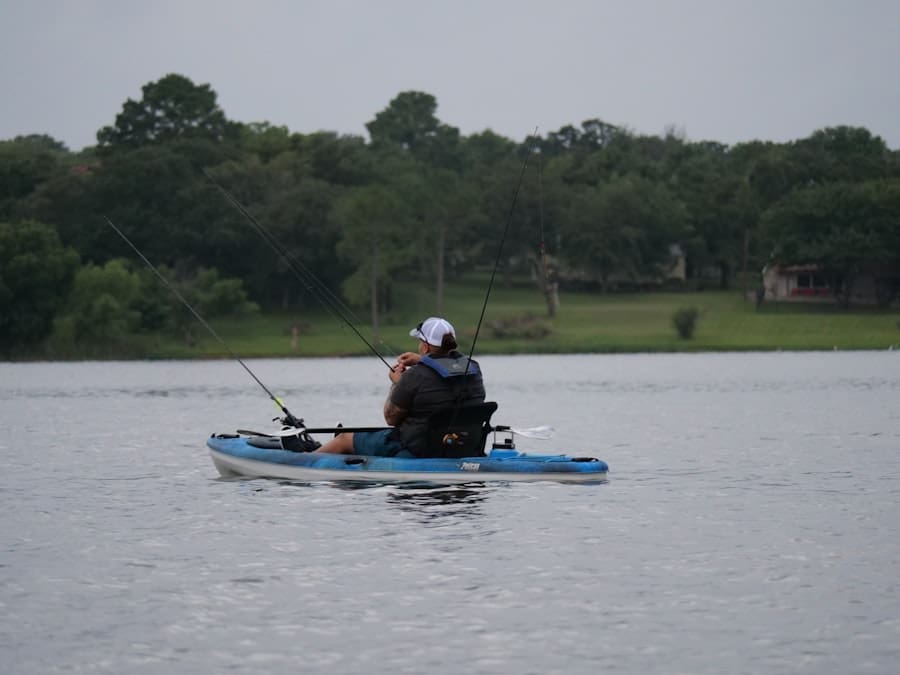
Having explored the individual characteristics of rods and reels, we are now poised to discuss their crucial interrelationship. A well-matched rod and reel system is more than the sum of its parts; it is an extension of the angler, allowing for seamless operation and optimal performance.
Balance: The Foundation of Feel
Balance is paramount. When we hold a properly balanced rod and reel combination, the pivot point should be near the foregrip, just in front of or behind where our hand rests. This prevents the rod from feeling tip-heavy or butt-heavy, reducing fatigue during long fishing sessions and enhancing sensitivity. An unbalanced setup feels cumbersome, similar to trying to write with an improperly weighted pen. We advocate for visiting a local tackle shop to physically hold and feel various combinations.
Line Weight Compatibility: The Unseen Connection
Every rod has a recommended line weight range, and every reel has a specified line capacity. Adhering to these recommendations is not merely a suggestion; it is a critical safety and performance measure.
- Rod’s Line Rating: This indicates the optimal breaking strength of the fishing line the rod is designed to handle. Using line significantly heavier than the rod’s rating can put undue stress on the blank, potentially leading to breakage, especially during a powerful hook set or battle with a large fish. Conversely, using extremely light line on a heavy rod can hinder casting performance and make it difficult to feel subtle bites.
- Reel’s Line Capacity: This specifies how much line of a certain diameter the reel spool can hold. Overfilling a spool can lead to tangles, decreased casting distance, and potential line damage. Underfilling can reduce drag performance and casting distance.
Always consider the type of line (monofilament, fluorocarbon, or braid) as their diameters vary significantly for the same breaking strength. Braided line, for example, is much thinner than monofilament of equivalent strength, allowing for more line to be spooled onto a reel, or for heavier braid to be used without exceeding capacity.
Application-Specific Selection: Tailoring Your Tools
The most effective approach to selecting a rod and reel is to define the primary application. Are we targeting panfish in a small pond, or battling tuna offshore? Our choice should reflect these demands.
- Finesse Fishing (e.g., crappie, trout, small bass): An ultra-light or light power spinning rod with a fast or moderate-fast action, paired with a small spinning reel (typically 1000-2500 series) spooled with light monofilament or fluorocarbon (2-6 lb test). This system maximizes sensitivity for delicate presentations.
- General Purpose Freshwater (e.g., bass, walleye, pike): A medium-light to medium power spinning or baitcasting rod, with moderate-fast to fast action. A 3000-4000 series spinning reel or a medium-sized baitcaster (100-200 series) spooled with 8-15 lb test line offers versatility. For bass, many anglers will have multiple setups to cover different techniques.
- Heavy Freshwater/Light Saltwater (e.g., catfish, redfish, snook): A medium-heavy to heavy power rod, often with a fast action for power and hook setting. A larger spinning reel (4000-6000 series) or a robust baitcasting reel (200-300 series) with 15-30 lb test braided line is common.
- Inshore Saltwater (e.g., snook, redfish, smaller tarpon): A medium-heavy to heavy power, fast action rod, typically 7-8 feet in length. Spinning reels in the 5000-8000 series or conventional reels with strong drag systems are preferred, spooled with 30-50 lb braided line and a fluorocarbon leader. Corrosion-resistant materials are essential.
- Offshore Saltwater (e.g., tuna, marlin, wahoo): Here, specialized heavy-duty conventional or stand-up rods are paramount, paired with powerful lever drag conventional reels. Line capacities are massive, and drag systems capable of 50+ lbs of pressure are common. These setups are designed for brutal strength and endurance.
By understanding the synergy between rod and reel, and aligning this system with our intended fishing application, we move beyond simply buying gear; we invest in precision tools that will enhance our angling capabilities.
Material Matters: The Foundation of Durability and Performance

The materials used in constructing fishing rods and reels significantly impact their performance, durability, and cost. Understanding these material choices empowers us to make smarter purchasing decisions.
Rod Blank Materials: Graphite, Fiberglass, and Composites
The “blank” is the core of the fishing rod. Its composition dictates a rod’s weight, sensitivity, strength, and action.
- Graphite (Carbon Fiber): The most prevalent material in modern fishing rods. Graphite rods are prized for their exceptional sensitivity, allowing us to feel even the most subtle bites. They are also remarkably lightweight and possess a fast recovery rate (meaning they return to their straight position quickly after flexing), which aids in casting distance and accuracy. Higher modulus graphite typically results in lighter, stiffer, and more sensitive rods, but can also make them more brittle and expensive. These rods are excellent for techniques requiring a keen sense of touch, such as jigging or worm fishing.
- Fiberglass: The traditional material for fishing rods. Fiberglass rods are renowned for their exceptional durability and flexibility. They possess a slower action, loading deeper into the blank, which makes them excellent for casting crankbaits or other treble-hook lures where the forgiving nature of fiberglass helps prevent hooks from pulling out of a fish’s mouth. They are generally heavier and less sensitive than graphite rods. Fiberglass remains popular for certain applications, such as trolling or fishing with reaction baits, and is often a more budget-friendly option.
- Composites: These rods combine different materials, typically graphite and fiberglass, to leverage the strengths of each. For example, a composite rod might have a graphite core for sensitivity and a fiberglass outer layer for durability and flexibility. This hybrid approach aims to create rods that offer a balanced performance profile, suitable for a wider range of applications.
Reel Construction Materials: Lightweight Strength and Corrosion Resistance
The longevity and smooth operation of a reel depend heavily on the materials used in its construction.
- Graphite/Composite Frames: Common on entry-level and mid-range spinning and baitcasting reels. Graphite frames are lightweight and corrosion-resistant. However, they can flex somewhat under heavy loads, potentially leading to slight gear misalignment and reduced retrieve smoothness when fighting a large fish.
- Aluminum Frames: A step up in terms of rigidity and strength. Aluminum frames provide a more solid platform for the reel’s internal components, leading to greater durability and smoother operation under stress. They are heavier than graphite but offer superior power and longevity. Anodized aluminum is commonly used to enhance corrosion resistance, particularly important in saltwater environments.
- Magnesium Frames: Found in high-end, lightweight reels. Magnesium offers an excellent strength-to-weight ratio, making for incredibly light and stiff reels. However, it is more susceptible to corrosion, especially in saltwater, and typically comes with a higher price tag. Careful maintenance is critical for magnesium reels.
- Stainless Steel/Brass Gears: The gears within a reel are subjected to immense stress. Stainless steel is highly durable and corrosion-resistant, making it a common choice for pinion gears and other critical components. Brass is frequently used for main gears due to its strength, smooth meshing characteristics, and good wear resistance. High-end reels may feature more advanced gear materials and coatings for enhanced durability and smoothness.
- Bearings: The quality and number of bearings significantly impact a reel’s smoothness and longevity. Look for corrosion-resistant stainless steel bearings, particularly those that are sealed to prevent the ingress of dirt and saltwater. More bearings do not automatically equate to a better reel; the quality and strategic placement of those bearings are far more important.
Our understanding of these material choices guides us towards gear that not only performs optimally but also endures the rigors of our chosen fishing environment.
When selecting the best fishing rods and reels, it’s essential to consider not only the equipment but also how to store and maintain them effectively. For those interested in DIY projects, you might find it helpful to explore a related article on creating a homemade bow and arrow rack for under $30. This guide can inspire you to build a custom storage solution that keeps your fishing gear organized and easily accessible. Check out the article here for some creative ideas.
Accessories and Maintenance: Prolonging the Lifespan of Our Investment
| Product Name | Type | Rod Length | Power | Reel Type | Line Weight | Best For | Price Range | User Rating |
|---|---|---|---|---|---|---|---|---|
| Shimano Solora 2-Piece Spinning Rod | Spinning Rod | 6 ft | Medium | Spinning Reel | 6-12 lb | Freshwater, Bass, Panfish | Low | 4.5/5 |
| Ugly Stik GX2 Spinning Combo | Spinning Rod | 6’6″ | Medium-Heavy | Spinning Reel | 8-17 lb | Freshwater, Bass, Walleye | Low-Mid | 4.7/5 |
| Abu Garcia Veritas Casting Rod | Casting Rod | 7 ft | Medium | Baitcasting Reel | 8-14 lb | Freshwater, Bass | Mid | 4.6/5 |
| Penn Battle II Spinning Combo | Spinning Rod | 7 ft | Medium-Heavy | Spinning Reel | 10-20 lb | Saltwater, Inshore, Redfish | Mid | 4.4/5 |
| St. Croix Triumph Casting Rod | Casting Rod | 6’6″ | Medium | Baitcasting Reel | 6-12 lb | Freshwater, Bass, Trout | Mid-High | 4.8/5 |
| Okuma Cedros CJ-65S Spinning Rod | Spinning Rod | 6’6″ | Heavy | Spinning Reel | 20-50 lb | Saltwater, Offshore, Big Game | High | 4.5/5 |
Our fishing rods and reels represent a significant investment, both financially and in terms of the enjoyment they bring. Proper care and the right accessories can drastically extend their lifespan and ensure continued peak performance.
Rod Guides and Reel Seats: Small Details, Big Impact
- Rod Guides: The small rings along the rod blank through which the fishing line passes. Their material and construction significantly affect casting distance, line wear, and sensitivity.
- Stainless Steel: Durable and affordable, but can be heavy and may corrode in saltwater if not properly maintained.
- Ceramic (e.g., Aluminum Oxide, Silicon Carbide – SiC): Lighter, harder, and smoother than stainless steel, reducing line friction and heat buildup. SiC guides are particularly prized for their extreme hardness and smoothness, making them ideal for braided lines which can abrade lesser guide materials.
- Reel Seats: The component that securely attaches the reel to the rod. Most are made from graphite composite or aluminum. Graphite seats are lightweight and warm to the touch, while aluminum seats offer superior strength and are preferred for heavy-duty applications. Ensure the reel seat provides a snug, wobble-free fit for your reel.
Line Selection: The Critical Link
The fishing line is the unsung hero of our tackle system, the direct conduit between us and the fish.
- Monofilament (Mono): The traditional choice. It is affordable, stretches, and has good knot strength. The stretch acts as a shock absorber, which can be beneficial for certain lures or fighting strong fish. However, it can have higher memory (coiling) and lower sensitivity compared to other line types.
- Fluorocarbon (Fluoro): Possesses excellent abrasion resistance and is virtually invisible underwater due to its refractive index being similar to water. It has less stretch than monofilament, offering increased sensitivity, and sinks, which can be advantageous for certain lure presentations. It is generally more expensive than mono.
- Braided Line (Braid): Incredible strength-to-diameter ratio, no stretch, and exceptional sensitivity. This makes it ideal for feeling subtle bites and for punching through heavy cover. Braid casts very well and offers superior knot strength. However, it is highly visible, can be abrasive to rod guides if low quality, and requires a fluorocarbon or monofilament leader for most applications.
Our choice of line must align with the rod power, reel type, target species, and the specific fishing technique employed.
Essential Maintenance Practices: Protecting Our Gear
Regular maintenance is not an option; it is a necessity for preserving the functionality and lifespan of our equipment.
- Rinsing After Use: This is particularly crucial for saltwater applications. Freshwater rinse rods and reels thoroughly to remove salt, sand, and grime. Avoid high-pressure sprays as these can force water into delicate internal mechanisms.
- Lubrication: Reels require periodic lubrication with high-quality reel grease for gears and reel oil for bearings and moving parts. Consult your reel’s manual for specific lubrication points and recommended products. Over-lubrication can be detrimental, attracting dirt and hindering performance.
- Line Inspection and Replacement: Regularly inspect your line for nicks, abrasions, or discoloration. Replace line as needed, often annually for frequently used setups, or more frequently if exposed to harsh conditions or heavy use. Old, weakened line is a common cause of lost fish.
- Storage: Store rods in a way that prevents bending or damage to the blank or guides. Rod socks or rod tubes are excellent for protection. Store reels in a cool, dry place, ideally in a reel case, to prevent dust accumulation and physical damage. Disengage the drag slightly during storage to reduce tension on the drag washers.
By embracing these maintenance practices, we ensure our fishing rods and reels remain reliable companions, ready for countless future adventures on the water. We are not just buying tackle; we are investing in a passion, and with proper care, that investment will pay dividends for years to come.