

Hunting gear and weaponry are the tools that bridge the gap between intention and execution in the pursuit of game. Selecting the right equipment can significantly influence a hunter’s success, safety, and ethical approach to the activity. This article provides an overview of essential hunting gear and common weapon types, focusing on their functionality and considerations for selection.
Firearms remain the most prevalent category of hunting weapons. Their effectiveness lies in their ability to deliver a projectile with considerable force and accuracy at range. The choice of firearm is dictated by the type of game being pursued, legal regulations, and the hunter’s proficiency.
Rifles
Rifles are characterized by a rifled barrel, which imparts a spin to the bullet, stabilizing its flight and enhancing accuracy. They are the weapon of choice for most medium to large game, offering the necessary power and range.
Bolt-Action Rifles
The bolt-action rifle is a workhorse of the hunting world. Its design features a manually operated bolt that cycles cartridges in and out of the chamber. This mechanism is known for its reliability, simplicity, and inherent accuracy. The straightforward operation makes it less prone to malfunctions in adverse weather conditions. A bolt-action rifle is akin to a well-tuned engine; each component works in harmony to deliver consistent performance.
- Action: The bolt allows for the loading, firing, and ejection of cartridges. It requires manual manipulation for each shot.
- Caliber: The caliber refers to the diameter of the bore and the projectile. Common hunting calibers range from smaller options like .223 Remington for varmints to larger ones like .30-06 Springfield or .300 Winchester Magnum for larger game. The chosen caliber must match the game’s size and the ethical harvesting of that animal.
- Ammunition: Bullets are designed with various constructions, including soft-point, full-metal jacket, and bonded cores, each suited for different game types and desired terminal ballistics.
- Barrels: Barrel length influences muzzle velocity and accuracy. Longer barrels generally provide higher velocities, while shorter barrels offer greater maneuverability.
Lever-Action Rifles
Lever-action rifles offer a faster rate of fire than bolt-action rifles, facilitated by a lever located below the receiver. This action is often favored for hunting in dense cover where quick follow-up shots might be necessary. The visual and operational characteristics of a lever-action rifle evoke a sense of classic hunting tradition.
- Action: The lever cycles ammunition, making it faster to operate than a bolt action for subsequent shots.
- Tube Magazine: Many lever-action rifles utilize a tubular magazine located beneath the barrel to store ammunition.
- Common Calibers: Popular calibers include .30-30 Winchester and .45-70 Government, often associated with large game such as deer and bear.
Semi-Automatic Rifles
Semi-automatic rifles fire a round and then utilize the energy of that shot to automatically cycle the next round into the chamber. While offering rapid firing capability, their complexity can sometimes make them more susceptible to malfunctions than simpler action types.
- Action: The rifle automatically loads the next round after a shot is fired, without manual cycling by the user.
- Magazine: Typically use box magazines for ammunition.
- Applications: Can be used for various game, though regulations may restrict their use for certain species or in specific hunting scenarios.
Shotguns
Shotguns are designed to fire a shell containing multiple pellets (shot) or a single projectile (slug). Their primary application is for smaller game and waterfowl, although with slugs, they can be effective for larger game at shorter ranges.
####pump-Action Shotguns
Pump-action shotguns are arguably the most common type of shotgun for hunting. They feature a sliding fore-end that is manually operated to eject spent shells and chamber new ones. Their reliability and relatively affordable price make them a practical choice. The pumping action is a distinct and recognizable feature.
- Action: The fore-end of the shotgun is moved back and forth to cycle ammunition.
- Gauge: Shotgun gauges (e.g., 12 gauge, 20 gauge) are a measure of bore diameter. 12 gauge is the most powerful and versatile, while 20 gauge is lighter and suitable for smaller game or younger hunters.
- Ammunition: Shotgun shells can contain shot (pellets of various sizes) or slugs (single projectiles). The type of ammunition is critical for the intended quarry.
####Semi-Automatic Shotguns
Similar to semi-automatic rifles, these shotguns automatically cycle the next shell after a shot. They offer a higher rate of fire than pump-action models and can reduce felt recoil for some shooters.
- Action: Automatic cycling of shells enhances the speed of firing.
- Recoil Operation: Some semi-automatic shotguns utilize the recoil of the fired shell to operate the action, while others use gas.
Handguns
While not typically a primary hunting weapon for most larger game, handguns can be used for smaller game or as a backup weapon for larger game. Their utility is generally limited by range and stopping power.
Revolvers
Revolvers are characterized by a revolving cylinder that holds multiple cartridges. They are renowned for their mechanical simplicity and reliability. A revolver is a straightforward tool, much like a well-sharpened knife; its operation is fundamental.
- Action: Cartridges are held in a rotating cylinder.
- Caliber: Available in a wide array of calibers, from .22 LR for small game to powerful .44 Magnum or .45 Colt for larger game, though with significant range limitations.
Semi-Automatic Pistols
Semi-automatic pistols utilize a magazine to hold cartridges and an action that cycles them into the chamber. They offer a higher ammunition capacity than most revolvers.
- Action: Magazines load cartridges into the chamber and a slide cycles.
- Caliber: Popular hunting calibers include .357 Magnum (when used in single-shot or specific revolver platforms mimicking pistols), 10mm Auto, and .44 Magnum.
When preparing for a successful hunting season, having the right gear and weapons is essential. For those interested in archery, understanding how to properly sight in a compound bow can significantly enhance accuracy and performance. To learn more about this crucial aspect of bow hunting, check out this informative article on how to sight in a compound bow: How to Sight in a Compound Bow. This resource will provide valuable tips and techniques to ensure your equipment is ready for the hunt.
Archery Equipment: The Traditional Approach
Archery hunting has seen a resurgence, offering a more challenging and intimate hunting experience compared to firearms. It requires a different set of skills and equipment, emphasizing stealth and precision.
Compound Bows
Compound bows utilize a system of cables and pulleys to multiply the archer’s draw force, making it easier to hold the bow at full draw and increasing arrow velocity. They are the most common type of bow used by modern bowhunters.
- Draw Weight: The force required to pull the string back to full draw. This is a critical factor in selecting a bow for specific game.
- Let-Off: The percentage reduction in holding weight at full draw. A higher let-off makes holding the bow steady easier.
- Arrow Speed: Influenced by draw weight, draw length, and bow efficiency, it affects the arrow’s trajectory and energy.
- Sights: Magnified sights can be used to improve aiming accuracy.
- Arrow Rest: Supports the arrow before and during the shot.
Recurve and Traditional Bows
Recurve and longbows are simpler designs that generate their power solely through the flexing of the limbs. They offer a more traditional and instinctive shooting experience, requiring greater skill and practice.
- Limbs: The parts of the bow that bend to store energy.
- Draw Length: The length of the string pull.
- Arrow Spine: The stiffness of an arrow, which must match the bow’s draw weight and length for proper flight.
Arrows and Broadheads
Arrows are projectiles fired from bows, and their construction is vital for accuracy and effectiveness. Broadheads are the projectile points designed for hunting, intended to cause significant tissue damage for a humane kill.
- Arrow Shafts: Typically made of carbon, aluminum, or wood, each offering different durability, weight, and flight characteristics.
- Fletching: The vanes or feathers on the rear of the arrow that stabilize its flight.
- Broadheads: These range from fixed-blade designs to mechanical (retractable) broadheads, each with pros and cons concerning penetration and wound channels.
Optics: Extending the Hunter’s Vision
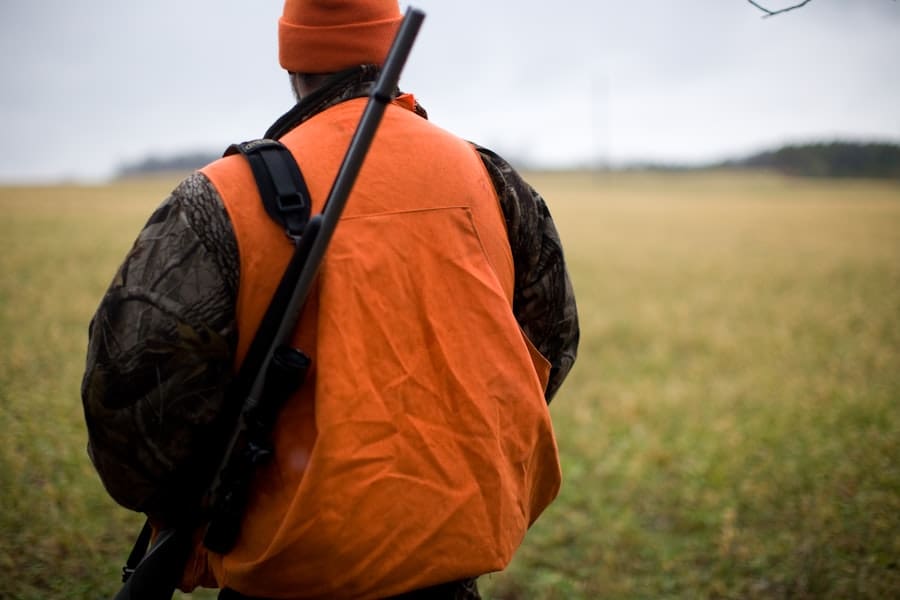
Optics are indispensable tools for modern hunting. They allow hunters to positively identify game, assess distance, and make informed decisions before taking a shot. They are the eyes that pierce the fog of distance.
Binoculars
Binoculars are handheld optical devices that provide magnified, stereoscopic vision. They are essential for glassing terrain, spotting game, and evaluating potential shots.
- Magnification: The primary number in a binocular’s specification (e.g., 10×42 means 10x magnification). Higher magnification allows for viewing distant objects but can reduce the field of view and make hand-held stability more challenging.
- Objective Lens Diameter: The second number in the specification (e.g., 10×42). Larger objective lenses gather more light, providing a brighter image, especially in low-light conditions.
- Field of View: The width of the area visible at a specific distance. A wider field of view is beneficial for scanning the landscape.
- Eye Relief: The distance from the eyepiece at which a full, clear image can be seen. This is important for eyeglass wearers.
Rangefinders
Rangefinders use laser technology to measure the distance to a target. Accurate range estimation is crucial for making ethical and effective shots, especially with firearms and archery equipment where trajectory becomes a significant factor.
- Laser Type: Most hunting rangefinders use Class 1 lasers, which are safe for the eyes.
- Range: The maximum distance the device can accurately measure.
- Angle Compensation: Some advanced rangefinders can compensate for uphill or downhill shots by calculating the true horizontal distance.
- Scan Mode: Allows for continuous ranging of multiple targets in a sweep.
Scopes and Sights
Rifle scopes and bow sights are mounted directly onto the weapon to aid in aiming.
Rifle Scopes
Rifle scopes contain lenses that magnify the target and a reticle (crosshairs) for aiming.
- Magnification: Variable scopes allow for adjustment (e.g., 3-9x). Fixed scopes have a single magnification.
- Objective Bell Size: Influences light-gathering capability.
- Reticle Type: Various reticles exist, some with built-in range estimation features or stadia lines.
- Turrets: Used for adjusting the scope’s elevation and windage.
Red Dot Sights and Holographic Sights
These sights project a illuminated reticle onto a lens, providing a fast and intuitive aiming point. They are particularly useful for close-range shooting and game where quick target acquisition is paramount.
- Reticle: A simple dot or other illuminated pattern.
- Parallax Free: Designed so the reticle appears to be at the same distance as the target regardless of the shooter’s eye position.
Clothing and Footwear: The Hunter’s Second Skin
Appropriate clothing and footwear are vital for comfort, safety, and concealment in the field. They act as a barrier against the elements and help the hunter blend into their surroundings.
Camouflage Clothing
Camouflage patterns are designed to break up the hunter’s outline and blend with natural environments. The effectiveness of camouflage depends on the pattern and the environment it is intended to mimic.
- Pattern Types: Various patterns exist for different terrains, such as woodland, desert, or snow.
- Layering System: Effective hunting clothing often involves a layering system to adapt to changing weather conditions. Base layers manage moisture, mid-layers provide insulation, and outer layers offer protection from wind and precipitation.
Insulated and Waterproof Gear
Protection from the elements is paramount. Insulated clothing keeps the hunter warm, while waterproof and windproof outer layers shield against rain, snow, and wind.
- Materials: Gore-Tex and other breathable waterproof membranes are common for outer layers.
- Insulation: Down and synthetic fills provide warmth.
Footwear
Hunting boots are designed for support, traction, and protection in rugged terrain.
- Traction: Lugged outsoles provide grip on various surfaces.
- Support: Ankle support is crucial for navigating uneven ground.
- Waterproofing: Many hunting boots are waterproofed to keep feet dry.
- Insulation: Insulated boots are necessary for cold-weather hunting.
When preparing for your next hunting adventure, it’s essential to have the right equipment, and understanding how to effectively use your gear can make all the difference. For those new to archery, a great resource is an article that provides insights on how to shoot a compound bow for beginners. You can find it here: how to shoot a compound bow for beginners. This guide can help you enhance your skills and ensure you’re ready for your next hunt.
Essential Accessories: The Supporting Cast
| Category | Item | Key Features | Typical Use | Average Weight (lbs) | Price Range |
|---|---|---|---|---|---|
| Firearms | Bolt-Action Rifle | High accuracy, reliable, bolt mechanism | Big game hunting | 7.5 | 500 – 1500 |
| Firearms | Compound Bow | Cam system for power, adjustable draw weight | Deer and small game hunting | 4.0 | 300 – 1000 |
| Clothing | Camo Jacket | Water-resistant, breathable, insulated | All-season hunting | 2.0 | 50 – 200 |
| Optics | Hunting Scope | Variable zoom, anti-reflective coating | Long-range targeting | 0.5 | 150 – 800 |
| Accessories | Rangefinder | Laser distance measurement, compact | Distance estimation | 0.3 | 100 – 400 |
| Weapons | Crossbow | High draw weight, quick reload | Medium to large game hunting | 6.5 | 400 – 1200 |
| Footwear | Hunting Boots | Waterproof, insulated, durable sole | All-terrain hunting | 3.0 | 80 – 250 |
Beyond the primary weapon and optics, numerous accessories enhance a hunter’s preparedness and efficiency. These items are the supporting actors that ensure the play runs smoothly.
Knives and Multi-tools
A sharp, durable knife is essential for field dressing game. Multi-tools offer a range of functions in a compact package.
- Blade Material: High-carbon stainless steel is common for its edge retention and corrosion resistance.
- Handle Material: Durable and grippy materials like G10 or rubber are favored.
Packs and Backpacks
Packs are used to carry gear, ammunition, water, and harvested game.
- Capacity: Measured in liters or cubic inches, the pack’s size should match the duration and type of hunt.
- Frame Type: Internal or external frames can influence load-carrying comfort.
Calls and Scent Control
Calls are used to mimic animal vocalizations to attract game. Scent control products aim to reduce or eliminate human odor, which can alert wary animals.
- Call Types: Various calls exist for different species, from deer grunts to waterfowl quacks.
- Scent Eliminators: Sprays, soaps, and laundry detergents designed to remove human scent.
First-Aid Kit and Navigation Tools
Safety is a primary concern. A well-stocked first-aid kit and reliable navigation tools (map, compass, GPS) are critical.
- First-Aid: Should include bandages, antiseptic wipes, pain relievers, and materials for treating common outdoor injuries.
- Navigation: A map and compass are essential backups to electronic devices.
The selection and mastery of hunting gear and weapons are ongoing processes. Understanding the function and application of each piece of equipment allows a hunter to approach their pursuit with greater confidence and effectiveness, while always prioritizing safety and ethical hunting practices.




No comment yet, add your voice below!